Teaching
Courses
Medicinal Chemistry and Instrumental Analysis for bachelor's and master's students.
Bachelor's Lecture
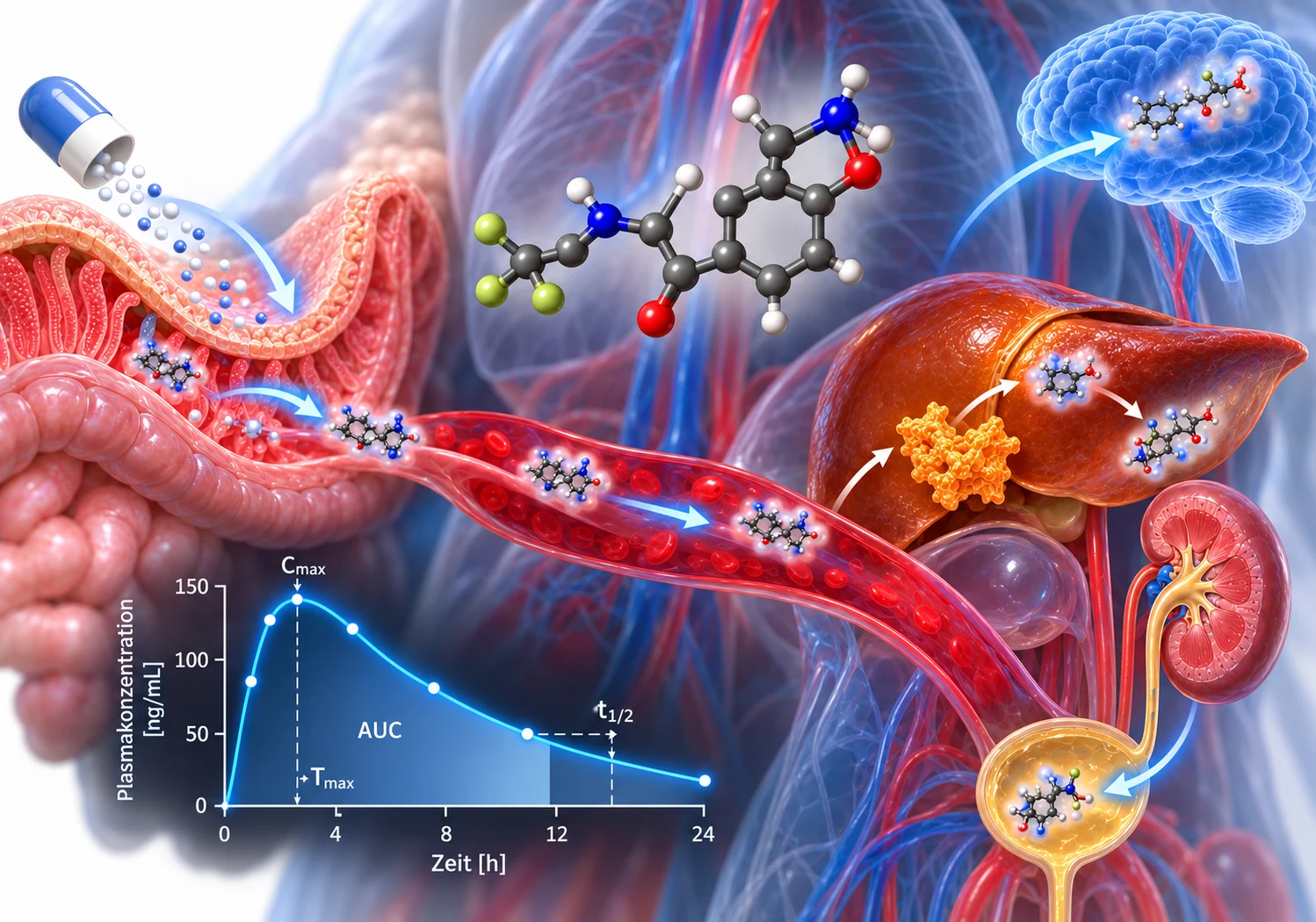
Medicinal Chemistry I
1st semester · Biotechnical Chemistry
Molecular properties, pharmacokinetics, and pharmacodynamics: fundamentals from drug design to anti-infective agents.
Moodle course link to be added.
Lecture Syllabus
1. Introduction to Medicinal Chemistry
- Definition and Interdisciplinary Context
- Drug Substance, Medicinal Product, and Therapeutic Effect
- ADME-Tox, Pharmacokinetics, and Pharmacodynamics
- Structure–Activity Relationships
- Historical Development of Drug Discovery
2. Molecular Properties and Drug-Likeness
- Small-Molecule Drugs and Molecular Descriptors
- Molecular Weight, Atom Count, and Structural Motifs
- Lipophilicity: logP and logD
- Molar Refractivity and Molecular Surface Area
- Lipinski's Rule of Five, Ghose Filter, and Veber Rules
- Basic Computational Descriptors
3. Membranes, Lipophilicity, and Absorption
- Structure of Biological Membranes and Their Lipid Components
- Acid–Base Equilibria and Degree of Ionization
- pKa, logP/logD, and Lipophilicity Profiles
- Gastrointestinal Absorption and Membrane Permeability
- Passive, Paracellular, and Transcellular Transport
- PAMPA and Caco-2 Permeability Assays
- Solubility, Bioavailability, and Formulation Strategies
4. Prodrugs, Nucleoside Analogs, and Peptidomimetics
- Prodrug Concept and Requirements for Promoieties
- Enzymatic Activation and Release Mechanisms
- Examples: Aspirin, Chloramphenicol, Oseltamivir, Adefovir
- Nucleoside Analogs and Polymerase Inhibitors
- Remdesivir and Antiviral Strategies
- Peptides, Peptidomimetics, and Proteolytic Stability
5. Enzymes, Proteases, and Enzyme Inhibition
- Enzymes as Drug Targets
- Peptidases and Proteases
- Serine Proteases, Catalytic Triad, and Oxyanion Hole
- Covalent and Competitive Inhibitors
- Transition-State Analogs and Mimetics
- Metalloproteases and Matrix Metalloproteinases
- Ribonucleases
- EC Nomenclature and the BRENDA/MEROPS Databases
6. Pharmacodynamics: Agonists, Antagonists, and Allostery
- Receptor Binding and Binding Equilibria
- Affinity, Efficacy, and Potency
- Dose–Response Relationships and EC50
- Full, Partial, and Inverse Agonists
- Competitive and Irreversible Antagonists
- Schild Analysis
- Allosteric Modulation and Feedback Regulation
7. Protein–Ligand Interactions and Drug Design
- Lock-and-Key and Induced-Fit Models
- Specificity and Chemical Promiscuity
- Dissociation Constant and Free Energy of Binding
- Hydrogen Bonds, Ionic and Hydrophobic Interactions
- Desolvation and Enthalpic and Entropic Contributions
- Conformational Degrees of Freedom
- Implications for Rational Drug Design
8. Lead Compounds, Assays, HTS, and Hit-to-Lead
- Definition and Sources of Lead Compounds
- Pharmacophore Modeling and Virtual Screening
- Assay Design and Homogeneous Fluorescence Assays
- Diverse and Focused Compound Libraries
- High-Throughput Screening
- Hit Selection and Hit-to-Lead
- Preclinical Optimization and ADME-Tox
9. Screening Systems, HTE, and Drug Target Fundamentals
- Microtiter Plates and Automated Liquid Handling
- HTS and uHTS Systems
- Compound Collection Handling
- Process Scheduling and Integrated Screening Workflows
- High-Throughput Experimentation in Other Application Areas
- Basic Concepts and Classes of Pharmacological Targets
10. Biotransformation and Drug Metabolism
- Fundamentals of Biotransformation and Elimination Pathways
- First-Pass Effect
- Phase I Reactions: Hydrolysis, Oxidation, Reduction
- Cytochrome P450 Enzymes and Epoxide Hydrolases
- Phase II Reactions: Glucuronidation, Acetylation, and Sulfation
- Glutathione Conjugation
- Detoxification and Metabolic Bioactivation
11. Anti-Infective Agents and Antibiotics
- Infection, Immune Defense, and Selective Toxicity
- Prokaryotes, Eukaryotes, and the Bacterial Cell Wall
- Gram-Positive and Gram-Negative Bacteria
- Mechanisms of Antibiotic Action
- Sulfonamides and Folate Metabolism
- Penicillins: Mechanism of Action, SAR, and Resistance
- β-Lactamases and Strategies to Overcome Resistance
- Cephalosporins and the Evolution of Their Generations
Master's Lecture
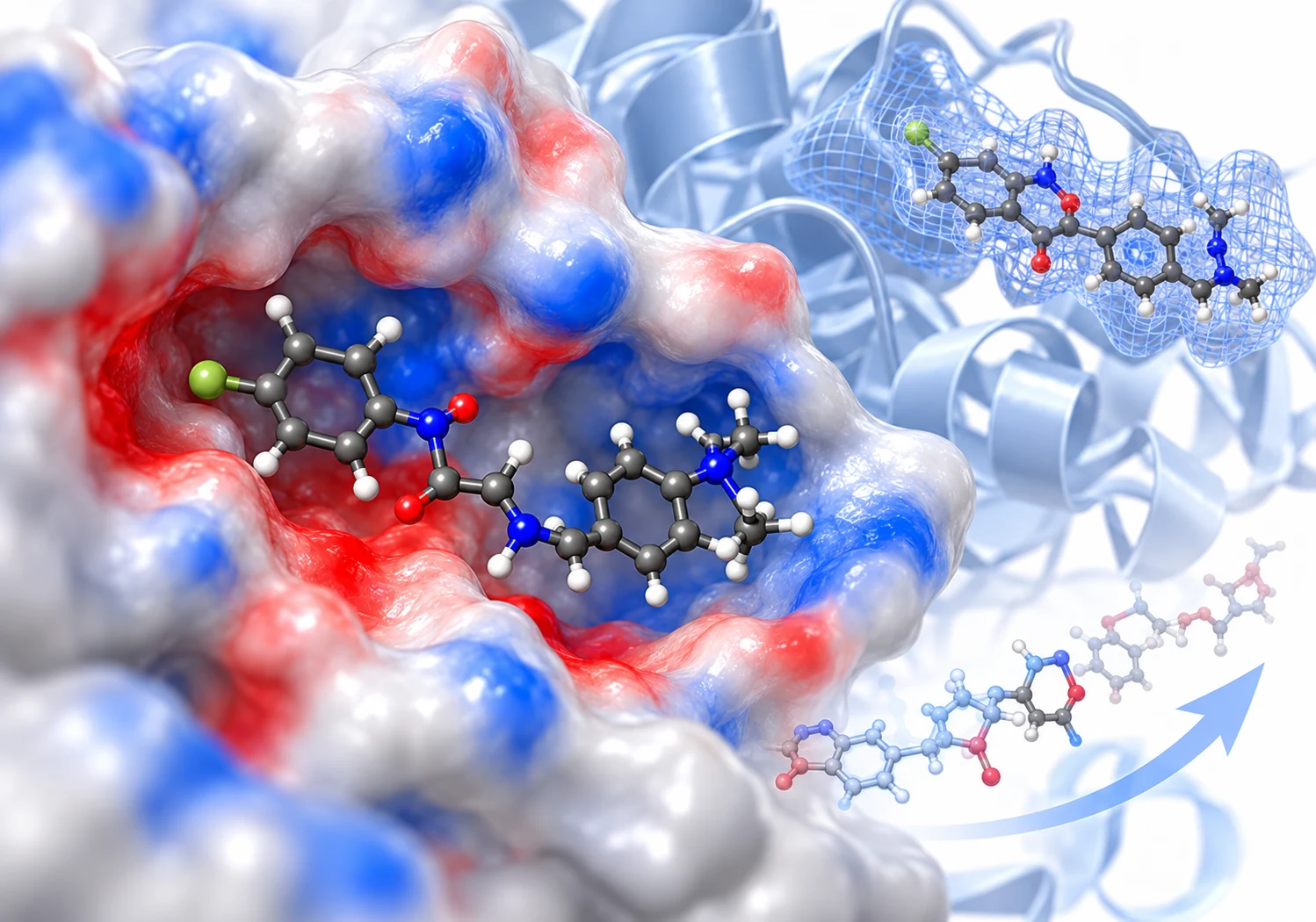
Medicinal Chemistry II
1st semester · Biotechnical Chemistry
Protein–ligand interactions, fragment-based drug discovery, and biophysical methods for hit validation.
Moodle course link to be added.
Lecture Syllabus
1. Advanced Protein–Ligand Interactions
- Thermodynamics of Ligand Binding
- Specificity, Affinity, and Free Energy of Binding
- Hydrogen Bonding, Hydrophobic, and Ionic Contributions
- Desolvation and Structural Water Molecules
- Enthalpy–Entropy Compensation
- Conformational Dynamics and Design Principles
2. Lead Compounds, Pharmacophores, and Virtual Screening
- Lead Compound Concepts and Pharmacophore Modeling
- Virtual Compound Libraries
- Ligand- and Structure-Based Drug Design
- Molecular Descriptors and Chemical Similarity
- In-Silico Screening and Docking as Discovery Tools
3. Assays, HTS, and the Hit-to-Lead Pipeline
- Assay Design and Readout Methods
- Homogeneous Fluorescence Assays
- Library Selection: Diverse vs. Focused
- High-Throughput Screening and Automation
- Hit Selection and Orthogonal Validation
- Hit-to-Lead and Optimization of Pharmacological Properties
4. Fragment-Based Drug Discovery: Concepts and Library Design
- FBDD vs. Conventional HTS
- Chemical Space and Challenging Drug Targets
- Rule of Three
- MedChem and PAINS Filters
- Synthetic Accessibility and Fragment Quality
- Chemical Diversity, Three-Dimensionality, and sp3 Fraction
- Molecular Fingerprints and Tanimoto/Jaccard Coefficients
- Experimental Requirements for Fragment Libraries
5. Quantitative FBDD: KD, ΔG, LE, and LipE
- Weak Binding and Target Occupancy
- Dissociation Constant KD and Free Binding Energy ΔG
- Concentration Requirements in Fragment Screening
- Ligand Efficiency (LE)
- Lipophilic Efficiency (LipE)
- Evaluation and Prioritization of Fragment Hits
6. Biophysical Hit Validation
- Direct and Indirect Binding Methods
- Surface Plasmon Resonance (SPR)
- X-Ray Crystallography
- In-silico-Docking
- Low-Affinity Chromatography (LAC)
- Affinity Selection Mass Spectrometry (ASMS)
- SEC–MS and HDX-Based Methods
7. Thermal Shift and Microscale Thermophoresis
- Thermal Shift Assay (TSA)
- Differential Scanning Fluorimetry (DSF/nDSF)
- Intrinsic Protein Fluorescence
- Thermophoresis and the Ludwig–Soret Effect
- Microscale Thermophoresis (MST)
- Binding Curves and KD Determination
- MST-Workflow
8. NMR Methods in FBDD
- Ligand- and Protein-Observed NMR Screening Strategies
- STD-NMR
- WaterLOGSY
- Relaxation-Based Methods and CPMG
- DOSY
- 19F NMR
- 1H-15N HSQC/TROSY and Chemical-Shift Perturbation
9. MS-Based Methods in FBDD
- Native Mass Spectrometry
- Isotope and Charge-State Distributions
- Adducts and Spectral Complexity
- Charge-State, Isotope, and Spectral Deconvolution
- LC/UPLC/CE/SEC-MS
- Fragment-Mass-Tagging
- Covalent Fragments and Peptide Mapping
10. FBDD Case Studies: Vemurafenib and Venetoclax
- Fragment Expansion and Fragment Linking
- Hit-to-Lead and Lead Optimization
- Vemurafenib as a RAF Kinase Inhibitor
- Venetoclax as a BCL-2 Inhibitor
- FBDD as a Strategy for Previously Intractable Targets
11. Mechanistic and Covalent Enzyme Inhibition
- Serine Proteases as a Model System
- Catalytic Triad and Oxyanion Hole
- Covalent Blocking of the Active Site
- Competitive and Irreversible Inhibition
- Transition-State Analogs and Mimetics
12. Metalloproteases, MMPs, RNases, and Databases
- Thermolysin and Metalloproteases
- Matrix Metalloproteinases and the Extracellular Matrix
- Ribonucleases and Reaction Mechanisms
- EC Nomenclature
- MEROPS and Enzymology Databases
Bachelor's Lecture
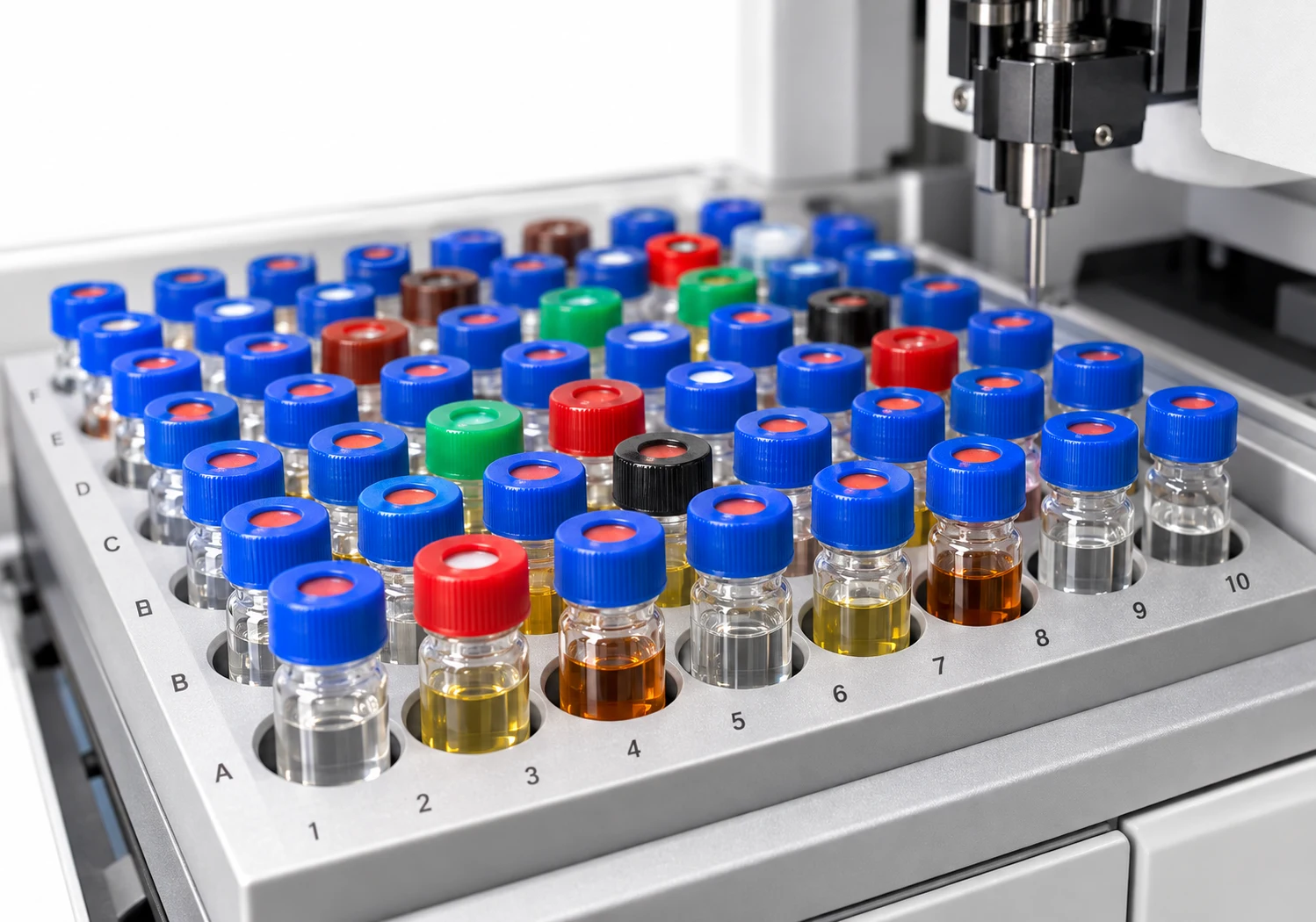
Analytics
4th semester · Biotechnical Chemistry
Instrumental analysis. A detailed course outline will be added.
Moodle course link to be added.
Master's Lecture
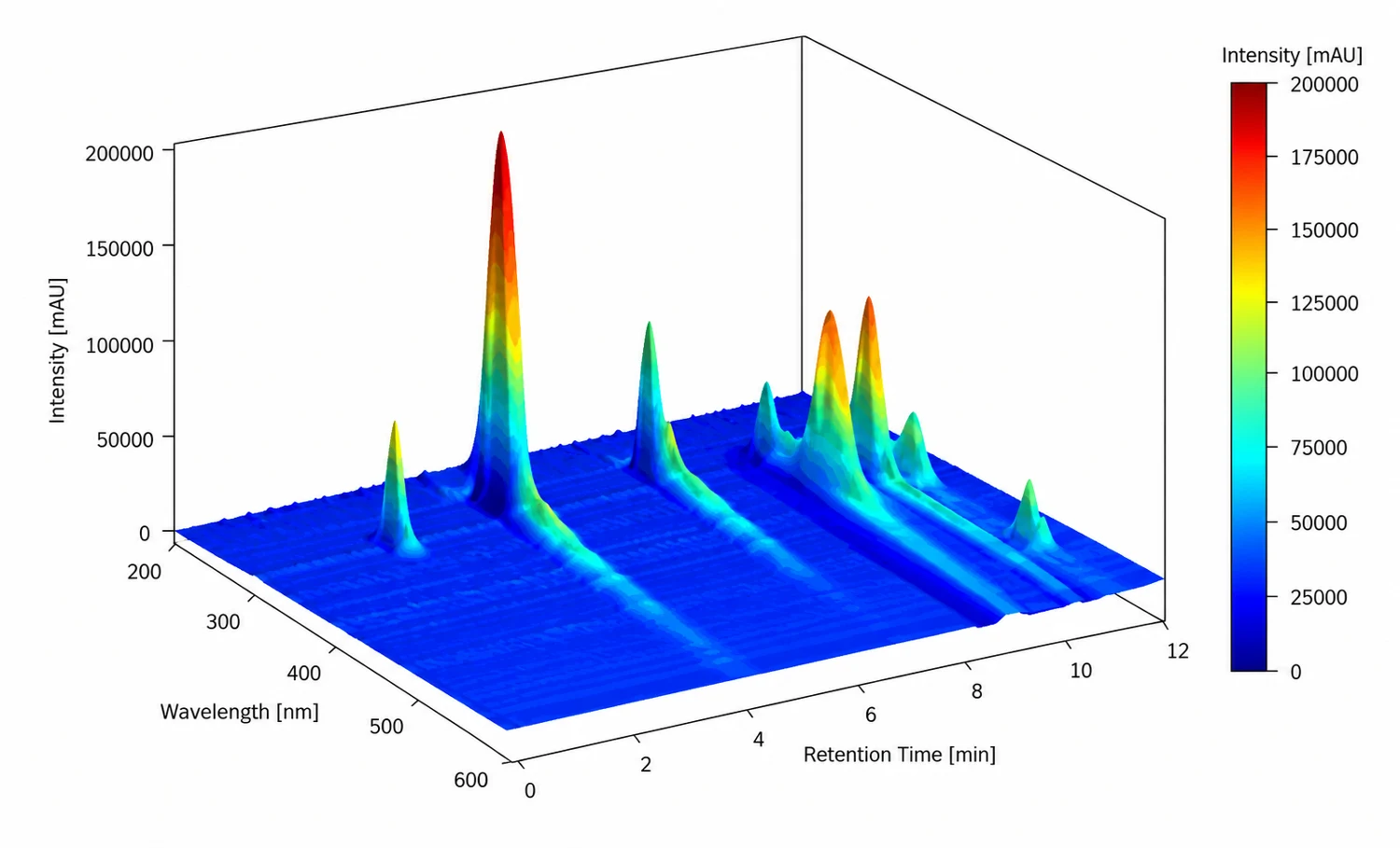
Bioinstrumental Analysis
1st semester · Biotechnical Chemistry / Electrochemistry and Electroplating
From analytical problem formulation and chromatographic or electrophoretic separations to coupling with mass spectrometry.
Moodle course link to be added.
Lecture Syllabus
1. Analytical Task and Sample
- 1.1 Analytical Question, Process, and Sampling
- 1.2 Sample Preparation
- 1.3 Separation Principles and Partition Equilibria
- 1.4 Selection of a Separation Technique
2. Fundamentals of Chromatographic Separations
- 2.1 Retention, Selectivity, and Resolution
- 2.2 Plate Number and Van Deemter Equation
- 2.3 Method Optimization
3. Liquid Chromatography and HPLC
- 3.1 Phases, Separation Modes, and Elution Strength
- 3.2 Elution, Temperature, and pH
- 3.3 HILIC
- 3.4 Chiral LC and SFC
- 3.5 Chromatogram Evaluation and DAD
- 3.6 HPLC System and Detectors
- 3.7 Derivatization
4. Ionic and Size-Based Separations
- 4.1 Ion Chromatography and Suppression
- 4.2 Ion-Pair Chromatography
- 4.3 Size-Exclusion Chromatography
- 4.4 Multimodal Chromatography
- 4.5 Field-Flow Fractionation
5. Gas Chromatography
- 5.1 Separation Principle, Injection, and Columns
- 5.2 Method Optimization and Detectors
- 5.3 Headspace and Thermal Desorption
6. Electrophoretic Separations
- 6.1 Mobility and Electroosmotic Flow
- 6.2 Capillary Zone Electrophoresis
- 6.3 Other Electrophoretic Techniques
7. Multidimensional and Miniaturized Separations
- 7.1 LC×LC and GC×GC
- 7.2 Microfluidic Separation Systems
8. Separation and Mass Spectrometry
- 8.1 LC–MS and Electrospray
- 8.2 LC–MS Data Analysis
- 8.3 GC–MS and LC–MS/MS
- 8.4 Ion Mobility–MS
9. Evaluation of Analytical Methods
- 9.1 Validation
- 9.2 Calibration and Measurement Uncertainty
- 9.3 Case Study: From Sample to Result
Student Research Projects
Bachelor's and Master's Theses
Potential thesis topics in the Physical Chemistry & Catalysis research group.
Bachelor's / Master's
Synthesis and Characterization of Thermoreversible Photoswitches
Organic Chemistry · NMR · LC–MS · UV/Vis
Available from January 2027
Bachelor's / Master's
Flow Chemistry for Continuous Reaction Optimization
Flow Chemistry · Organic Chemistry · Online Analytics
Available now
Bachelor's / Master's
In-situ Photopolymerization Analysis by DOSY NMR
In-situ Irradiation NMR · DOSY · Organic Chemistry
Available now
Subject to available laboratory workspaces. Additional topics are available upon request.
Enquire about a Thesis TopicCompleted Theses
A list of completed bachelor's and master's theses will be added.